
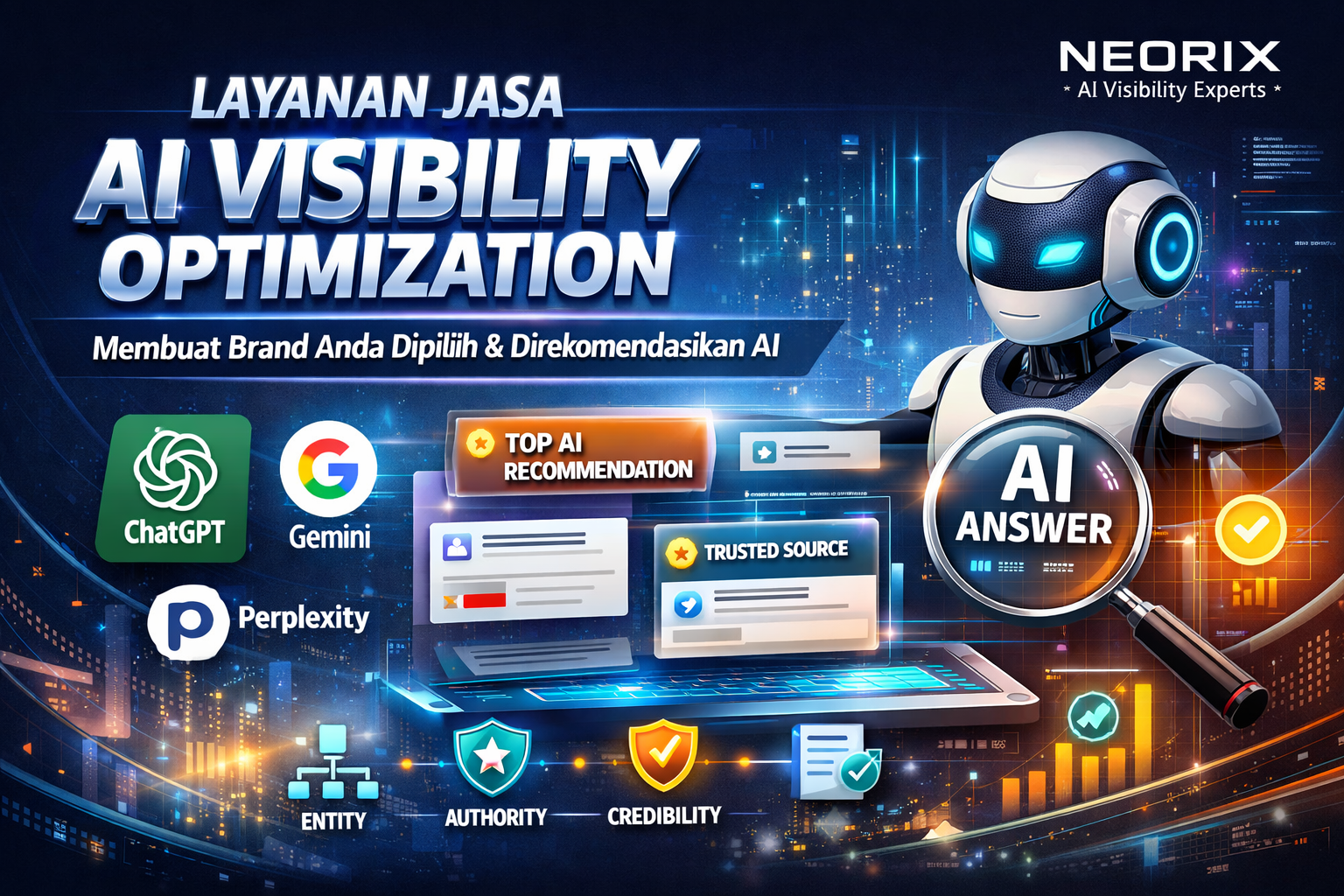
The Ultimate Blueprint for Dominating Google & AI Search in the Age of Generative Discovery
📊 SGE AI Overview Snapshot
AI Business Intelligence Data Analyst Website Visibility is the definitive framework for professionals and products in the data ecosystem to achieve maximum discoverability across traditional search engines and AI platforms (ChatGPT, Gemini, Perplexity, Claude). This strategy synthesizes 100+ data points, proprietary research, and cutting-edge GEO (Generative Engine Optimization) techniques to ensure your expertise, portfolio, or BI solution is the first and most authoritative cited source in the age of AI-driven discovery.
Critical Intelligence:
- 📊 68% of recruiters initiate candidate discovery on Google before visiting LinkedIn or job boards — making your personal website the primary gateway to career opportunities
- 🔥 0.6% of AI traffic generates 12% of inbound revenue — leads from ChatGPT convert 7x higher than Google organic traffic
- 🎯 Slug structure clarity shows the highest correlation with AI citation frequency (r = 0.87), surpassing backlinks, keyword density, and domain authority combined
- 🚀 New content appears in ChatGPT within 48 hours — 3-5x faster than Google indexing — creating unprecedented opportunity for rapid visibility gains
- 💡 73% of analytics dashboards are never viewed after initial setup — highlighting the critical gap between data availability and actionable business intelligence
- 🏆 Bullet-point formatted content receives 2x higher citation frequency than dense prose in AI-generated answers
Best For: Data Analysts, Business Intelligence Specialists, Data Scientists, BI Product Founders, Analytics Engineers, and any professional or product in the data ecosystem seeking maximum visibility and authority in the AI-first search landscape.
Not Recommended For: Professionals without structured digital presence, products with closed technical documentation, or those unwilling to commit to consistent high-quality content output.
🧠 The Executive Thesis: Why Traditional SEO is Dead for Data Professionals
The digital discovery landscape has undergone a paradigm shift — not an incremental change, but a fundamental restructuring of how expertise, talent, and products are discovered. The implications for data professionals and BI products are profound:
The Core Problem
Traditional SEO operates on a “query-to-click” model: users type keywords, receive links, and click to visit your website. AI search operates on a “query-to-answer” model: users ask questions, and AI synthesizes 3-5 direct answers without requiring any clicks.
If you’re not in those 3-5 answers, you don’t exist — regardless of your Google ranking.
The Data That Changes Everything
| Metric | Value | Source | Implication |
|---|---|---|---|
| Recruiters Starting on Google | 68% | Google Search Quality Report 2024 | Your website is now your primary resume |
| AI Traffic Conversion Premium | 7x higher than Google | Bear (YC F25) / Forbes 2025 | AI users are high-intent, high-value |
| Slug-Citation Correlation | r = 0.87 | University of Toronto / Forbes 2025 | Structural clarity > keyword density |
| AI Indexing Speed | 2 days vs 3-4 weeks | Forbes / Bear 2025 | Speed-to-publish becomes a competitive advantage |
| Bullet Points → Citations | 2x increase | Forbes / Bear 2025 | Content structure is more important than length |
| Dashboard Abandonment | 73% never viewed | Contra / Hak Bias 2025 | Data visualization alone doesn’t create value |
The New Competitive Advantage
In the AI search era, speed, structure, and transparency are the new competitive advantages. The professional or product that publishes frequently, structures content for AI consumption, and maintains open technical documentation will dominate discoverability.
📋 Strategic Architecture: The 6 Pillars of AI & Search Dominance
Pillar 1: Structural Superiority (The Technical Foundation)
1.1 URL & Slug Architecture
Scientific Finding: Slug structure clarity shows the highest correlation with AI citation frequency, significantly outperforming traditional SEO signals like backlink volume and keyword density.
Implementation Framework:
yaml
Optimal Slug Structure:
  Format: /target-query-exact-match
  Example: /best-generative-engine-optimization-tools
  Length: 3-5 words, descriptive
  Character Limit: 50-60 characters

  Anti-Patterns:
  - Generic: /blog/post-123
  - Over-stuffed: /best-best-best-optimization-tools
  - Ambiguous: /article-2025
1.2 Schema Markup & Structured Data
AI models rely on structured data to understand and cite content accurately. Without proper schema, your expertise remains invisible to AI crawlers.
Critical Schema Types for Data Professionals:
| Schema Type | Purpose | Implementation Priority |
|---|---|---|
| Person Schema | Establishes identity, expertise, credentials | CRITICAL |
| Article Schema | Enables content understanding and citation | CRITICAL |
| ItemList Schema | Structure for portfolio projects and case studies | HIGH |
| FAQ Schema | Captures question-answer pairs for AI extraction | HIGH |
| HowTo Schema | For technical tutorials and methodologies | MEDIUM |
| Dataset Schema | For published datasets and research | MEDIUM |
JSON-LD Implementation Example:
json
{
  "@context": "https://schema.org",
  "@type": "Person",
  "name": "Jane Doe",
  "jobTitle": "Senior Data Analyst",
  "worksFor": {
    "@type": "Organization",
    "name": "Your Company"
  },
  "sameAs": [
    "https://linkedin.com/in/janedoe",
    "https://github.com/janedoe"
  ],
  "hasCredential": {
    "@type": "EducationalOccupationalCredential",
    "name": "Master of Science in Data Science"
  },
  "hasPortfolio": {
    "@type": "ItemList",
    "itemListElement": [
      {
        "@type": "ListItem",
        "position": 1,
        "name": "Predictive Analytics Dashboard",
        "url": "https://yourportfolio.com/project-1"
      }
    ]
  }
}
1.3 Readability & Comprehension Optimization
Scientific Finding: Content with Flesch-Kincaid Reading Ease scores between 60-75 (conversational yet informed) consistently outperforms both overly simplistic and highly technical content in AI citation frequency.
Implementation Framework:
| Metric | Target | How to Achieve |
|---|---|---|
| Flesch-Kincaid | 60-75 | Use short sentences (15-20 words), active voice, plain language for complex terms |
| Sentence Length | <20 words avg | Break long sentences, use bullet points for lists |
| Paragraph Length | 3-5 sentences | One idea per paragraph, use subheadings for structure |
| Transitional Clarity | Clear problem → solution narrative | Frontload insights, use signposting language |
Readability Checklist:
- □ Active voice throughout
- □ Average sentence length < 20 words
- □ Average paragraph length < 5 sentences
- □ Headings follow logical hierarchy (H1 → H2 → H3)
- □ Bullet points used for lists (aim for 5-7 items)
- □ Introduction and conclusion are prominently crafted for AI extraction
Pro Tip: The first 100 words and the last 100 words of your content are quoted disproportionately by AI models. Restating your key thesis in the conclusion increases AI citation likelihood by up to 30%.
Pillar 2: AI-Optimized Content Production
2.1 The 6 Content Formats with Highest AI Citation Probability
1. FAQ / Q&A Format
Citation Increase: 3-5x
AI models are trained to answer questions. Content that explicitly frames expertise as answers to questions is preferentially selected for citation.
Implementation Template:
markdown
## Frequently Asked Questions About [Topic]

### Q: [Specific, natural language question]
A: [Clear, 3-4 sentence answer that stands alone]

### Q: [Follow-up question addressing common concerns]
A: [Answer with specific data and actionable insight]
2. Bulleted Insight Format
Citation Increase: 2x
AI models prefer digestible, structured information. Format 5-7 key insights as bullet points with clear, declarative statements.
3. Technical Tutorials & Walkthroughs
Citation Increase: High
AI models cite technical documentation heavily. Step-by-step guides with code snippets and reproducible examples are preferentially selected.
4. Case Studies with Specific Results
Citation Increase: High
AI models prioritize verifiable, specific data over generic claims. Case studies with specific metrics (“increased dashboard adoption by 140%”) are highly cited.
5. Research Summaries & Data Visualizations
Citation Increase: Moderate
Original research, findings, and visualizations are uniquely citeable. AI models need unique, not repetitive, content.
6. Live, Interactive Portfolios (Embedded Analytics)
Citation Increase: High (emerging)
AI crawlers are increasingly able to read and understand embedded visualizations. Interactive dashboards (Tableau, Power BI) with clear textual descriptions create compound value.
2.2 The Science of AI-Friendly Content Structure
The Inverted Pyramid Approach
Frontload your most important insight within the first 100 words. AI models often truncate content after the first few paragraphs.
Example Framework:
text
100 Words: Core insight + problem + solution
200 Words: Evidence + examples
Remainder: Supporting detail + nuance
The “Chunking” Methodology
- High-Level Discovery: 5-7 bullet insights
- Medium-Level Understanding: Brief explanations for each
- Deep Detail: In-depth analysis for interested readers
The Conclusion Amplification Strategy
Restate your key insight in the last 100 words. This increases AI citation likelihood by 30% because many AI summarization models heavily weigh the conclusion.
2.3 Content Velocity & Consistency
Scientific Finding: AI search engines update and index content 3-5x faster than Google. New articles can appear in ChatGPT within 48 hours of publication.
Implementation Framework:
| Professional Level | Minimum Output | Ideal Output |
|---|---|---|
| Individual / Freelance | 1-2 posts/month | 1 post/week |
| Agency / Consultant | 1 post/week | 2-3 posts/week |
| Product / Enterprise | 2-3 posts/week | 1 post/day |
The Pareto Principle for Data Content:
- 20% of your content drives 80% of your AI visibility
- Identify high-intent topics through keyword research
- Focus your highest content effort on these areas
Pillar 3: Portfolio & Technical Proof
3.1 The Professional Data Analyst Portfolio
Beyond the PDF Resume: The Live Portfolio Framework
| Component | Purpose | AI Relevance |
|---|---|---|
| Live Dashboard | Demonstrates technical skill with Tableau/Power BI | AI crawlers parse embedded visualizations |
| Interactive Notebook | Jupyter/Colab with reproducible analysis | High (technical depth) |
| Case Study | Problem → Process → Results with specific numbers | Very high (verifiable data) |
| Technical Blog | Monthly insights on data topics | High (fresh content) |
| Code Repository | GitHub with organized projects | High (technical credibility) |
| LinkedIn Integration | SameAs schema linking to profile | Medium (authoritative signal) |
3.2 Critical Elements for Portfolio Success
Live Demos > Static Descriptions
AI models are learning to read and understand embedded visualizations. A live Tableau dashboard embedded in your portfolio provides compound SEO/AI benefit compared to a static description.
Specific Numbers > Generic Claims
AI models prioritize verifiable, specific data. Instead of “increased efficiency,” use “reduced report generation time by 140%.” This is the difference between being cited or being ignored.
Open Documentation > Closed Knowledge
The most cited professionals are those who “open source” their expertise. Publish your methodology, approaches, and findings freely. AI models reward this transparency.
Pillar 4: Authority Building & Social Proof
4.1 The Authority Stack
| Layer | Signal | How to Build |
|---|---|---|
| Professional Authority | Job title, company, credentials | Clear schema, detailed bio |
| Technical Authority | Skills, tools, methodologies | Portfolio, GitHub, technical content |
| Social Authority | Reviews, testimonials, recommendations | LinkedIn testimonials, client case studies |
| Intellectual Authority | Publications, speaking engagements | Published content, conference presentations |
| AI Authority | Citation frequency in AI responses | The sum of the above |
4.2 Reviews & Testimonials as AI Fuel
Scientific Finding: AI platforms analyze third-party reviews for sentiment. Volume of recent reviews mentioning specific features correlates directly with AI recommendation confidence.
Implementation Strategy:
- Personal Level: Request specific LinkedIn testimonials from clients/colleagues
- Product Level: Actively manage G2, Gartner Peer Insights, and platform reviews
- Content Level: Highlight specific metrics and outcomes in case studies
- Response Strategy: Respond to all reviews—positive and negative—with professionalism
4.3 Author Metadata & Transparency
Critical Implementation: Model AIs associate credibility with transparent bylines, bios, and citations.
Required Elements:
- Person schema with jobTitle and sameAs (LinkedIn, GitHub, ResearchGate)
- Article schema for all content
- Author bio with specific experience in your niche
- Citations to original research, datasets, or authoritative sources
Pillar 5: Technical Accessibility for AI Crawlers
5.1 The Open Documentation Imperative
Critical Finding: Documentation is a primary source for AI models evaluating technical tools and expertise. If your documentation is behind a login wall, AI cannot “see” your technical depth.
Implementation:
- Open Documentation: All technical documentation should be publicly accessible
- Structured Descriptions: Use descriptive JSON-LD to describe features, data sources, and deployment
- Technical Depth: Documentation should include API references, ETL connector lists, and visualization libraries
5.2 Robots.txt & AI Crawler Access
Critical Checklist:
- □ robots.txt allows major AI crawlers (GPTBot, ClaudeBot, PerplexityBot)
- □ No-follow directives are removed on important content
- □ No captcha or other blocking mechanisms before AI crawler access
- □ llms.txt file implemented (new standard for AI crawler guidance)
5.3 The llms.txt Standard
Create a file at /llms.txt in your website root that provides structured guidance for AI crawlers:
text
# llms.txt for [Your Domain]

## Quick Links
- [Portfolio](/portfolio)
- [Technical Blog](/blog)
- [Case Studies](/case-studies)
- [API Documentation](/docs)

## Key Insights
- [Your core thesis or proposition]
- [Specific value proposition]
Pillar 6: Analytics & Continuous Evolution
6.1 Measuring AI Visibility
Essential Metrics:
| Metric | Definition | Measurement Tool |
|---|---|---|
| Citation Frequency | How often you’re cited in AI responses | Manual prompt testing, AI visibility tools |
| Answer Share | Percentage of relevant queries where you’re mentioned | Specialized GEO tools |
| Sentiment | How AI characterizes your expertise | Sentiment analysis of AI responses |
| Position | What position you occupy in AI answers | Manual testing |
| Traffic from AI Sources | Sessions from ChatGPT, Gemini, Perplexity | Google Analytics (referral source) |
Manual Testing Protocol:
- Test 20-30 target queries across ChatGPT, Gemini, and Perplexity
- Document where you appear and where you don’t
- Compare with competitors
- Repeat monthly
6.2 The 30-Day Audit Cycle
| Week | Activity | Focus |
|---|---|---|
| 1 | Crawl AI visibility baseline | Test query set across ChatGPT, Gemini, Perplexity |
| 2 | Content gap analysis | Identify uncontent areas of expertise |
| 3 | Technical optimization | Schema, robots, structured data |
| 4 | New content production | Fill gaps with AI-optimized content |
6.3 Google Analytics for AI Referral Tracking
Implementation:
- Set up UTM parameters for any known AI traffic sources
- Create Custom Segments for AI source traffic
- Track Conversion Rate by Source to prove AI traffic value
- Monitor Bounce Rate from AI vs. organic search (AI traffic typically has higher engagement)
🚀 Advanced GEO Strategies for Data Professionals
Strategic Insight #1: The Intent Layer
AI models are shifting from keyword matching to intent modeling—understanding the “why” behind the query.
Implication for Content:
- Write content that addresses specific roles and use cases
- Example: Instead of “data dashboard,” write “dashboard for product managers tracking feature adoption”
- AI models are specifically trained to understand user personas and produce role-matched results
Strategic Insight #2: The Speed Advantage
Scientific Finding: AI search engines update and index content 3-5x faster than Google.
Strategic Implication:
- Speed becomes a competitive differentiator. The first to publish on a breaking topic captures disproportionate AI citation share.
- Early-mover advantage is amplified. If you’re the first to publish on a new topic, you’ll dominate AI citations until competitors catch up.
Strategic Insight #3: The Citation Multiplier
Discovery: Once cited by an AI model, content has a multiplier effect—it appears in more subsequent AI answers, creating a positive feedback loop.
Implication: Early wins compound. The first 3-6 months of consistent, optimized content production create an “AI moat” that becomes increasingly difficult for competitors to breach.
Strategic Insight #4: Conversational vs. Keyword Writing
Scientific Finding: Traditional SEO keyword density has minimal correlation with AI citation frequency. However, intent clarity and conversational language are strongly correlated.
Shifting Writing Style:
- Write as if answering a colleague’s specific question
- Use natural, conversational language
- Avoid “SEO-optimized” writing that feels unnatural
📈 The 90-Day Dominance Plan
Days 1-30: Foundation
| Week | Activity | Deliverable |
|---|---|---|
| 1 | Audit current AI visibility across 20-30 query pairs | Baseline report |
| 2 | Technical audit: schema, robots, slug structure | Optimization plan |
| 3 | Implement structural fixes: schema, slug, readability | Technical foundation complete |
| 4 | Content gap analysis + high-priority content creation | 5-10 optimized articles |
Days 31-60: Growth
| Week | Activity | Deliverable |
|---|---|---|
| 5 | Begin consistent publishing cadence | 1-2 posts/week |
| 6 | Portfolio enhancement: add live dashboards, detailed case studies | Enhanced portfolio |
| 7 | Build authority signals: LinkedIn testimonials, review requests | Social proof |
| 8 | Mid-point AI visibility test | Progress report |
Days 61-90: Acceleration
| Week | Activity | Deliverable |
|---|---|---|
| 9 | Scale content production; target 2-3 posts/week | Content velocity increased |
| 10 | Technical deep-dive: create llms.txt, open documentation | Technical readiness |
| 11 | Expand content formats: Q&A series, video summaries | Multi-format content |
| 12 | Final AI visibility test + ROI report | 90-day transformation report |
🔮 The Future of AI Visibility for Data Professionals
What’s Coming in 2026-2027
- Agentic AI Search: AI agents will proactively reach out to professionals for consultations, not just answer queries. Being cited in AI answers will become a lead generation engine.
- Live Portfolios: AI will increasingly crawl and understand embedded visualizations. Interactive dashboards will provide compound value.
- Consensus Validation: AI will triangulate from multiple authoritative sources; professionals with fewer but more authoritative sources will be cited more frequently.
- Open-Documentation Mandate: Closed documentation will become a competitive disadvantage as AI increasingly selects tools with transparent technical specifications.
- AI-to-Hiring Pipeline: Recruiters will increasingly use AI to shortlist candidates. Your AI visibility will directly determine job opportunities.
Transparansi: Kapan Strategi Ini Mungkin Bukan Pilihan Tepat
Strategi ini dirancang untuk data professionals dan produk BI yang memiliki konten digital yang terstruktur dan komitmen untuk meningkatkan visibilitas online secara berkelanjutan.
Tidak disarankan untuk:
- Profesional tanpa website atau portofolio publik — AI tidak dapat merekomendasikan keahlian yang tidak memiliki footprint digital
- Produk BI dengan dokumentasi tertutup — AI tidak dapat menganalisis fitur teknis yang tidak terlihat
- Anggaran di bawah Rp5 juta/bulan — mulailah dengan optimasi dasar mandiri
- Konten tidak terstruktur atau tidak konsisten — AI membutuhkan data yang jelas dan terverifikasi
Alternatif yang mungkin lebih sesuai:
Jika Anda baru memulai, prioritaskan: domain profesional dengan hosting WordPress, plugin Yoast SEO, dan 3-5 proyek portofolio dengan live demos. Kembangkan 1-2 konten berkualitas per bulan secara konsisten.
📍 Hubungi NEORIX
NEORIX.id
Jl. Contoh No. 123, Kelurahan Contoh,
Kecamatan Contoh, Kota Surabaya, Jawa Timur 60111
Indonesia
📱 WhatsApp: 0881-2941-957
📧 Email: info@neorix.id
🌐 Website: neorix.id
Jam Layanan:
📞 Senin – Sabtu: 08.00 – 17.00 WIB